Using Commercial Paint to Increase Warehouse Safety

Keeping warehouse facilities safe is an ongoing challenge for managers, but few risk mitigation strategies carry the return on investment that safety painting offers. In fact, OSHA has determined that the top warehouse accidents include moving equipment hitting workers, and slip-and-fall incidents.
The right paint not only creates safer pathways, but paint can also increase traction on floors and even improve the psychological well-being of employees. Of course, paint won’t prevent all accidents, but it can alert employees to several potential hazards.
Imagine a road with no lane markings, road signs, or even stoplights — there would be chaos on the roadways. The same can be said for warehouses that don’t direct pedestrian or equipment traffic appropriately. Floor lines need to be used consistently throughout the facility and provide workers with color-coded safety instructions.
Here are the OSHA guidelines when it comes to floor marketings and lines for safety:
- The lines used to delineate the aisles may be any color so long as they clearly define the area considered as aisle space. The lines may be composed of dots, rectangles, stripes, or continuous lines, but they too must define the aisle area.
- The recommended width of aisle markings varies from 2 inches to 6 inches; therefore, any width 2 inches or more is considered acceptable.
- The recommended width of aisles is at least 3 feet wider than the largest equipment to be utilized, or a minimum of 4 feet.

While temporary floor lines can be a quick fix, they’re not ideal for warehouses with floor plans that don’t change. Depending on the volume of traffic throughout your facility, semi-permanent or permanent paint can be used. Working with a commercial paint professional can help you determine the best options.
OSHA doesn’t dictate color selection, but there are industry-wide best practices for commercial painting for warehouse safety. Yellow lines indicate aisles and paths of traffic, and red paint is used for serious hazards and warnings. The combinations of red and black, white and black, and yellow and black are all universally known.
Beyond that, facilities can choose which color-coded system works best but it must be consistent throughout the warehouse. Workflows can be structured throughout the building using painted walkways which can help increase productivity. Using paint, areas for equipment storage or maintenance can be designated, and paths of travel can be established for equipment operators.
Additionally, specialty commercial floor coatings can be used to increase traction and strength. Finding the right paint type and applying it correctly is key to coating aisles and stairways for protection against falls. Commercial floor coatings add a buffer zone between traffic or chemical spills and the concrete, reducing the wear that leads to damaged and dangerous warehouse floors.
Peeling, fading, and cracked floor markings are just as bad as having no markings at all. While warehouse paint is meant to withstand high volumes of traffic and wear from equipment, it’s not going to last forever. If there are frequent accidents in areas of your warehouse despite having proper floor markings, it may be time to repaint.
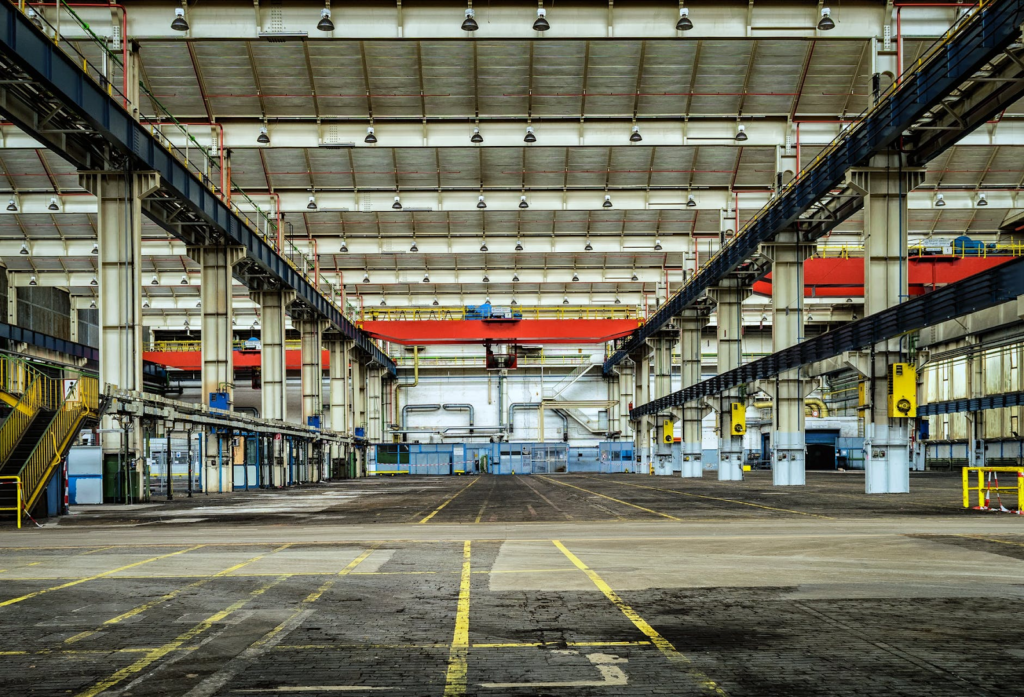
Preparing for commercial floor painting and coating means working with employees to create a plan that works for everyone. Schedule the painting project accordingly, take repairs and dry time into account, and clean out the warehouse to ensure optimum paint adherence.
Once the job is complete, the commercial paint contractor will help facility managers plan for proper maintenance, care, and cleaning. That training should be shared with warehouse employees and best practices should be established to extend the longevity of the paint. From start to finish, commercial safety marketings and floor coatings need to be managed and applied by professionals who have experience working in warehouses like yours.
Our team is trained to follow safety guidelines, and they have the experience, tools, and equipment to make the job go smoothly. We protect any of the adjacent surfaces not being worked on, including walls, doors, equipment, and anything else in the area that cannot or should not be removed.
Work will be done around your schedule, minimizing downtime and the impact on your warehouse workflows. We’ve been painting floors for 50 years and continue to win projects because we are a trusted partner — get in touch today.